Intro What Is MCP
Base my understanding, I try to use simple way to explain what is MCP (Model Context protocal).
The I/O
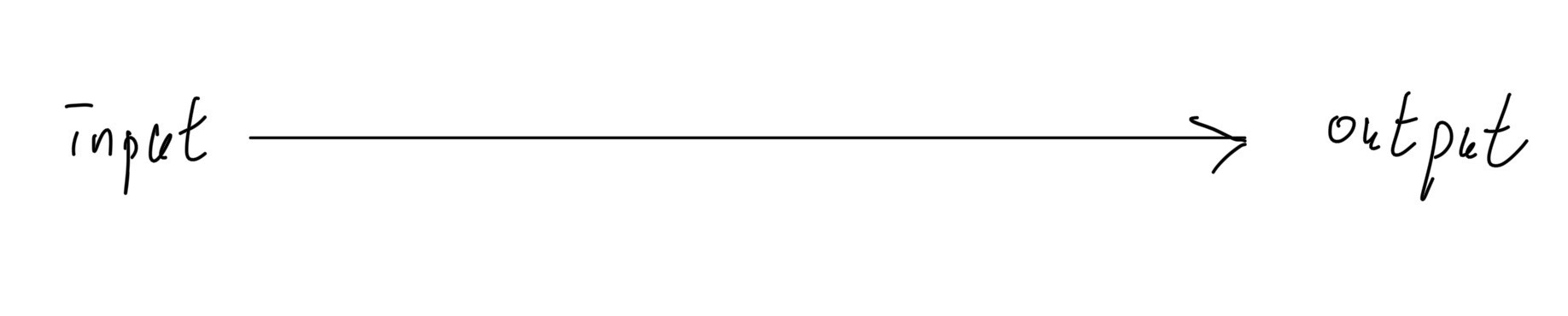
Input Output model is the only truth rule in computer. All action are Input and Output.
WebAPI
Like calling Web API, for example calling weather api:
Input: Query location.
Output: Json response with target location weather.
SQL
Other example work with SQL:
You always need to input SQL query like SELECT * FROM SOMETABLE, and then the SQL client will return back the table result.
Input: SQL Query
Output: Table result
All the action in computer are I/O model.
The LLM era
Now, we are in LLM era. What if…What if we inject LLM in to the I/O process like this:
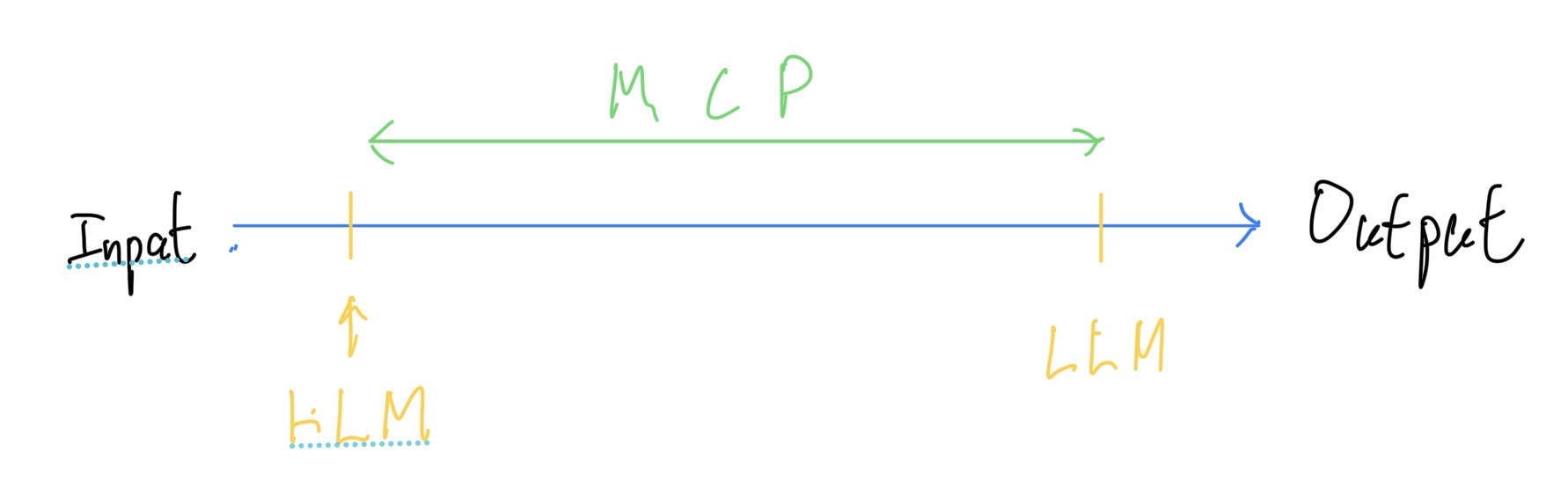
You may notices that it like a middleware. Inject LLM after input and before output. I think this is the most simple ways to explain what MCP doing.
Let us look back with the API example. To see what changes.
WebAPI
Before you need to follow the api documents and input exctly what the api query is. Like you need to input exctly location=HongKong and then pass to api url like: http://someapiurl?localtion=HongKong. That the only way to call weather api.
But now, because you inject the LLM, you can input human nature language:
Input: I want to know Hong Kong weather now.
Then LLM will understanding your input and extract the params “Hong Kong” and fill into api call.
And now Output, from weather api response, we may get sometings like:
json code snippet start
{"localtion": "HongKong", "temperature": "26C"}json code snippet end
Now cus we Inject the LLM on the Output, so rather then this boring raw json, LLM will read the output, in this case JSON text, to make a human nature language like output.
Output: HongKong temperature is now 26C.
The MCP
Now the question is: How the hack LLM know call which weather API Right? There’re 1000X weather api on the world, how LLM know call which one? That is the key about the MCP.
MCP server
To make sure LLM is calling your weather API, you need to make it as a tool by MCP server to expose to LLM.
So using MCP you need to build MCP server first. Details you can read the offical documents.
A short example for my weather api. I am uing Hong Kong Observatory open api:
python code snippet start
import json
import requests
from mcp.server.fastmcp import FastMCP
from datetime import timedelta

mcp = FastMCP("WeatherServer")

@mcp.tool()
async def get_general_situation():
    url = "https://data.weather.gov.hk/weatherAPI/opendata/weather.php"
    params = {
        "dataType": "flw",
        "lang": "tc"
    }

    response = requests.get(url, params=params)
    data = response.json()

    general_situation = data.get("forecastDesc", "未能取得天氣概況")
    return json.dumps({"generalSituation": general_situation})

if __name__ == "__main__":
    mcp.settings.host = '0.0.0.0'
    mcp.settings.port = 8080
    mcp.run(transport="sse")
python code snippet end
get_general_situation is my API endpoint. And added with @mcp.tool() decorator it will make MCP server to expose this function as tools and pass to LLM on MCP client, which talk this later.
Notice the “transport” parameter. We can choose “sse” or “stdio”. If your mcp client and mcp server are in local then better to use “stdio”, else use “sse”.
MCP VS API
MCP and API are both ways for systems to connect and share data or functionality. But MCP is more for LLM.
The MCP server actually can expose the function document, function name and required parameters to LLM.
| API | MCP (Model Context Protocol) | |
|---|---|---|
| Primary user | Human developers & traditional software | AI models / LLMs / AI agents |
| Purpose | General software-to-software communication | AI-specific: context, tool use, dynamic discovery |
| Discovery | Requires reading docs / SDKs | Self-describing (AI can ask “what can you do?”) |
| Typical use | Fixed, predefined integrations | Dynamic, agentic workflows (reason → act → observe) |
| Relationship | The foundation / low-level transport | Usually built on top of APIs (wrapper / adapter) |
| Standardization | Many formats (REST, GraphQL, etc.) | One uniform protocol for AI tools & context |
| State | Mostly stateless | Often stateful sessions (better for conversations) |
But MCP is not new replacement for API, it is enhance for LLM usage.